 ultimate-guide
Benefits of a German Nominee Director Service
Table of Contents
- What a German Nominee Director Service Actually Does
- GmbH Incorporation Requirements for Foreigners
- How the Notarization Process for German Company Formation Works
- Legal Responsibilities of a GmbH Managing Director
- Core Benefits of a German Nominee Director Service
- Risks, D&O Insurance, and Exit Planning
- Frequently Asked Questions
Last Updated: September 25, 2026
What a German Nominee Director Service Actually Does
A German nominee director service places a licensed local representative in the managing director seat of your GmbH, so a foreign founder can register a company without relocating or traveling to Germany. At German-Nominee.de, we've structured this arrangement since 1984 around a transparent trustee model: a licensed nominee shareholder and trustee holds the position formally, while you retain economic ownership and control through a nominee agreement and power of attorney.
The distinction that trips most founders up is between the nominee director and the nominee shareholder. They are separate roles, and you may need one, the other, or both depending on your structure. The director handles day-to-day management and legal representation of the company. The shareholder holds the shares. A clean trustee structure documents both, which is what German notaries and banks expect to see.
GmbH Incorporation Requirements for Foreigners
A GmbH can be founded by shareholders of any nationality, and no residency requirement applies to shareholders. The requirements that actually block foreign founders are practical, not legal: a managing director must be reachable and able to act, the company needs a registered office in Germany, and the share capital must be deposited before registration.
For a standard GmbH, the minimum share capital is €25,000, with at least €12,500 paid in before filing. A UG (haftungsbeschränkt) allows a lower starting capital but requires retention of profits. Confirm current figures with the official German company register information or a notary before you commit, since statutory details can change.
The managing director does not need to be a German citizen or resident, but a director based outside the EU who cannot easily appear before a German notary creates friction at every step: notarization, bank onboarding, and register filings. That friction is the primary reason foreign founders pursue a nominee director.
How the Notarization Process for German Company Formation Works
Every GmbH formation requires notarization. The articles of association (Satzung) must be certified by a German notary, and the managing director's appointment is documented in the same act. This is not optional and cannot be substituted with a foreign notary's certification, a point most guides state and then abandon, without explaining what actually happens after the notary's seal goes on the page.
The notary is the gatekeeper, not the finish line. Once the articles are certified and the share capital is deposited into a business account (or an escrow account the notary controls until registration), the notary files the formation electronically with the Handelsregister.
What the Handelsregister filing actually requires
The commercial register (Handelsregister) is maintained by the local Amtsgericht, the register court, and filings are submitted in structured electronic form. For a GmbH formation, the core submission includes:
- The certified articles of association and the managing director's appointment
- The shareholder list (Gesellschafterliste), which must be filed and is publicly inspectable
- The notary's certification of the capital payment
- The company's registered office address and business purpose
- The managing director's personal details, including date of birth and residence address
Where foreign filings fail
Once registered, the company receives its Handelsregister number, and the register entry becomes the public proof of the managing director's authority, the document banks, tax authorities, and counterparties will rely on. That is why the accuracy of the director's details at filing time matters well beyond the formation itself.
Legal Responsibilities of a GmbH Managing Director
A GmbH managing director (Geschäftsführer) carries personal liability that shareholders do not. Under German law, the director must file for insolvency without culpable delay once the company is insolvent or over-indebted. Failing to do so can trigger personal liability, and in serious cases, criminal liability.
What most guides miss is that liability follows the office, not the title on a business card. Even a nominee director holds these duties formally, which is exactly why a properly structured service pairs the appointment with D&O insurance and a clear contractual allocation of responsibilities. ::: (Source: German Federal Ministry of Justice and Consumer Protection's guidance on company law)
Core Benefits of a German Nominee Director Service
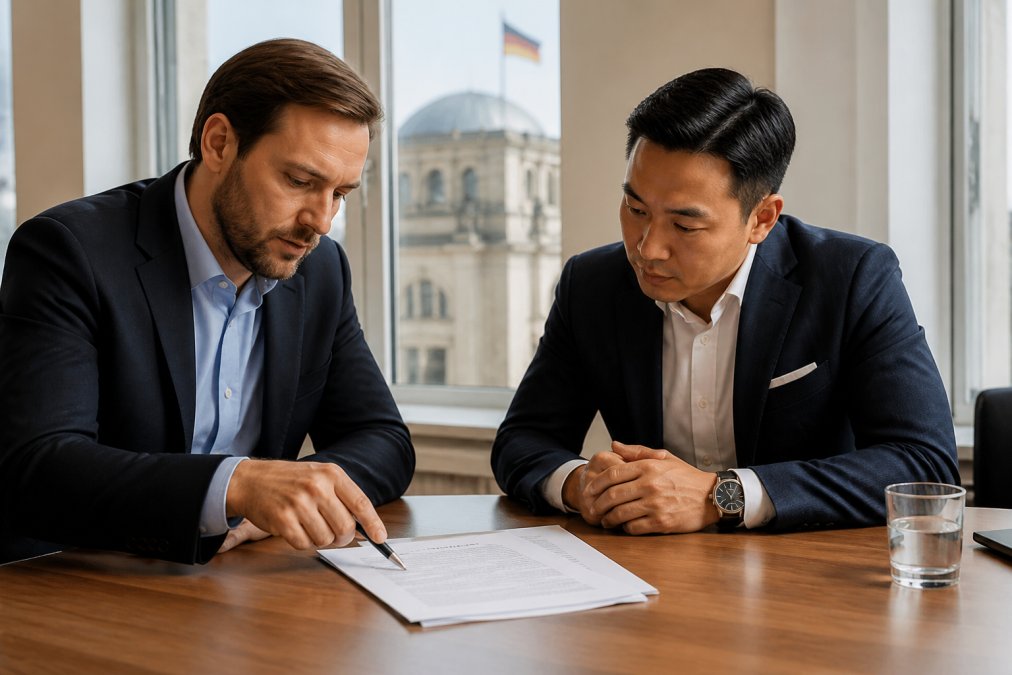
- Local presence for regulatory and banking purposes
- Compliant documentation prepared to German notary standards
- A legitimate corporate structure that stands up to due diligence
- Continuity for holding structures spanning multiple countries
Risks, D&O Insurance, and Exit Planning
The risks are real and worth naming plainly. A nominee director holds formal liability, so the arrangement must include D&O insurance and a written allocation of duties. Without it, a dispute or an insolvency filing can leave both parties exposed. But the three areas that decide whether a nominee structure survives contact with reality, insurance, anti-money-laundering vetting, and exit, are the ones most guides skip entirely.
D&O insurance: what it actually covers
Directors and Officers liability insurance (Vermögensschadenhaftpflicht für Organe) protects the managing director against claims arising from the exercise of the office. In a nominee arrangement, the policy serves two purposes at once: it covers the nominee against personal exposure, and it protects the founder from the nominee's insolvency-driven liability claims rebounding onto the company.
A few practical points most founders learn too late:
- The policy should name the office, not just the person. If the nominee changes, the cover should follow the directorship without a gap.
- Insolvency-related claims are the hard case. Claims connected to late or failed insolvency filing are the ones most likely to be excluded or contested. Read the exclusions, not the headline limit.
- Coverage limits are typically set in the low-to-mid six figures for a small GmbH. For a company with significant turnover, contracts, or cross-border exposure, that is often too thin, and a higher limit should be negotiated before the appointment is signed.
- The premium is usually borne by the company, which is standard, but the founder should confirm who is the policyholder and who controls the claim.
AML and KYC: the vetting runs both ways
Anti-money-laundering rules require identification of the beneficial owner, and banks apply KYC checks before opening an account. What founders often miss is that the nominee service itself must perform rigorous KYC on the beneficial owner before accepting the mandate. A reputable provider will not take on a directorship without it, and the absence of that vetting is itself a red flag.
Expect to document:
- The full ownership chain, including any intermediate holding companies, trusts, or foundations, traced up to the ultimate beneficial owner
- Proof of identity and address for each beneficial owner, with certified or apostilled copies where the documents originate outside Germany
- Source of funds and source of wealth for the capital being introduced
- The business purpose and expected transaction profile, so the provider can assess whether the structure fits the stated activity
Exit planning: the clause that decides everything
Exit planning deserves attention before you sign, not after. Your nominee agreement should state how the arrangement terminates, how the directorship transfers to you or your appointee, and what happens to the shares. Founders who skip this clause often find that unwinding the structure costs more than setting it up.
A workable exit clause covers four things:
- Trigger and notice period, on what event the arrangement ends, and how much notice each side must give
- Transfer mechanics, the steps to appoint a successor managing director and update the Handelsregister, including who bears the notary and court fees
- Share transfer, if a nominee shareholder is involved, the terms on which shares return to the founder or pass to a new holder
- Tail liability, what happens to claims arising from the nominee's period in office after the nominee has stepped down, and whether D&O cover extends to that tail
The benefits of a German nominee director service hold only when the structure is documented for its entire lifecycle, from notarization and Handelsregister filing, through AML and KYC vetting, to a defined exit with tail liability covered. Build the exit terms into the agreement on day one, and confirm the D&O policy follows the office rather than the individual.
Frequently Asked Questions
What is a nominee director service in the context of a GmbH?
A nominee director service provides a locally based, licensed individual to act as the managing director or shareholder of your GmbH. This satisfies German statutory requirements for local representation and helps foreign founders establish a compliant entity without relocating. The nominee holds a fiduciary duty to act in the company's best interest and ensures all filings with the Handelsregister and tax authorities are properly handled.
Are nominee director services legally compliant under German commercial law?
Yes, when structured transparently. German law permits trustee arrangements where the nominee acts on your behalf. The key is full disclosure to the notary, tax office, and commercial register. A compliant service uses a written nominee agreement and power of attorney, avoids hidden beneficial ownership, and ensures all parties meet anti-money laundering and KYC obligations. Working with a licensed provider since 1984 demonstrates long-term regulatory adherence.
How does a nominee director assist with German notary requirements?
German notaries require the managing director to appear in person or provide a certified power of attorney. A nominee director can attend the notarization on your behalf, sign the articles of association, and handle filings with the Handelsregister. This eliminates the need for you to travel and reduces the risk of rejected foreign documents, as the nominee is familiar with local notary standards and can present all paperwork correctly.
Can a non-resident entrepreneur establish a business without traveling to Germany?
Yes, with a nominee director service you can form a GmbH or UG entirely remotely. The nominee handles notarization, commercial register filing, and often supports bank account opening. This saves time and travel costs while ensuring compliance with German corporate law. Many international founders use this path to access the European Single Market and EU banking systems efficiently.
Founding a GmbH from abroad means navigating notarization, banking regulations, and liability rules that don't bend for foreign founders. German-Nominee.de has handled this since 1984 with a licensed German nominee shareholder and trustee, a transparent structure built for German notary requirements, and no travel required. Book a call to map your incorporation path and get operational in the German market without the usual delays.