 ultimate-guide
Opening a German Bank Account for Foreigners
Table of Contents
- What Foreigners Need to Know Before Opening a German Bank Account
- German Bank Account Requirements for Non-Residents
- Step-by-Step: How to Open a German Bank Account as a Foreigner
- Online Bank Account Opening in Germany: Video Identification Explained
- Tax ID (Steueridentifikationsnummer) for Bank Accounts
- Fees, Schufa Checks, and What Banks Won't Tell You Upfront
- Corporate Banking for Foreign-Owned GmbH and UG Entities
- Conclusion
Last Updated: August 13, 2026
What Foreigners Need to Know Before Opening a German Bank Account
Opening a German bank account as a foreigner presents bureaucratic hurdles that catch most newcomers off guard. German banks operate under strict financial regulation governed by the Bundesanstalt für Finanzdienstleistungsaufsicht (BaFin), and their onboarding processes reflect this. Creditworthiness, residency status, and identity verification are not formalities, they are gates.
Resident vs. Non-Resident Accounts: A Critical Distinction
Aresident account is a standard Girokonto (current account) available to individuals registered at a German address. A non-resident account is offered by select banks to individuals without a German address, typically with tighter restrictions and higher fees.
This distinction matters enormously. Most traditional branch banks will not open an account for a non-resident without an Anmeldung (official registration confirmation). Direct banks and digital providers are more flexible but have their own limitations. If you arrive in Germany without a registered address, your banking options narrow immediately.
Types of Accounts Available: Girokonto, Basiskonto, and Business Accounts
Three account types are relevant for most foreigners:
- Girokonto: The standard current account with IBAN, BIC, SEPA payment functionality, and debit card.
- Basiskonto: A basic payment account that German banks are legally required to offer to anyone with legal residence in the EU, regardless of creditworthiness or Schufa history, governed by the Zahlungskontengesetz.
- Business account (Geschäftskonto): Required for GmbH and UG entities. A corporate entity must have a separate business account to receive share capital and conduct commercial transactions.
German Bank Account Requirements for Non-Residents
Banks follow Know Your Customer (KYC) obligations under German anti-money laundering law (Geldwäschegesetz). Document requirements vary by institution, and gaps in your paperwork will result in rejection.
Document Checklist for Personal Accounts
For a standard Girokonto application as a foreigner, prepare:
- Valid passport (national ID card accepted for EU citizens)
- Proof of address: Meldebescheinigung (registration certificate) for residents; utility bill or official correspondence for non-residents where accepted
- Residence permit or visa documentation (for non-EU nationals)
- Tax identification number (Steueridentifikationsnummer), increasingly requested
- Completed application form (bank-specific)
Non-residents face the most friction here. Without a Meldebescheinigung, many banks decline outright. Digital banks may accept a foreign address but will conduct enhanced identity verification via VideoIdent or PostIdent.
Document Checklist for Corporate and Business Accounts
Corporate account requirements are considerably more demanding. For a GmbH or UG, banks typically require:
- Certified copy of the Handelsregister excerpt (commercial register entry)
- Articles of association (Gesellschaftsvertrag), certified by a German notary
- Proof of identity for all beneficial owners and authorised signatories
- Proof of business address in Germany
- Transparency register (Transparenzregister) documentation confirming beneficial ownership
- Tax identification number for the entity
For foreign-owned entities, banks will request additional documentation on the ultimate beneficial owner. Documents issued abroad may require legalisation or an Apostille.
Step-by-Step: How to Open a German Bank Account as a Foreigner
The application process differs between branch banks and direct banks, but the core sequence is consistent.

Step 1: Determine your residency status and account type Establish whether you are a resident (with Anmeldung) or non-resident. This determines which banks and account types are accessible to you.
Step 2: Gather your documents Use the checklists above. For non-EU nationals, confirm your visa status allows you to open a bank account.
Step 3: Choose your bank Branch banks offer more features but require in-person visits and a registered address. Direct banks handle the process digitally and are more accessible to newcomers and non-residents.
Step 4: Complete the application Online applications typically take 15-30 minutes. Branch applications require an appointment.
Step 5: Complete identity verification You will use either VideoIdent (video call with a bank agent) or PostIdent (in-person verification at a Deutsche Post branch).
Step 6: Receive your account details Once approved, you will receive your IBAN and BIC by post or digitally. Your debit card arrives within 5-10 business days.
Step 7: Activate your account Some banks require a PIN activation step via post or app before attempting transactions.
The Anmeldung Problem: Opening an Account Without a German Address
The Anmeldung is the official registration of your address with the local Einwohnermeldeamt (residents' registration office). Without it, most traditional banks will not proceed.
The practical workaround is to secure temporary accommodation, a short-term rental, or a registered co-working address and use that for registration. This is legal provided the address is genuine and you receive correspondence there. Digital banks are the more practical route for those who cannot complete an Anmeldung immediately, though account features are often more limited.
Online Bank Account Opening in Germany: Video Identification Explained
Remote identity verification has made opening a German bank account from abroad significantly more accessible. Most direct banks now offer digital onboarding that does not require you to visit a branch.
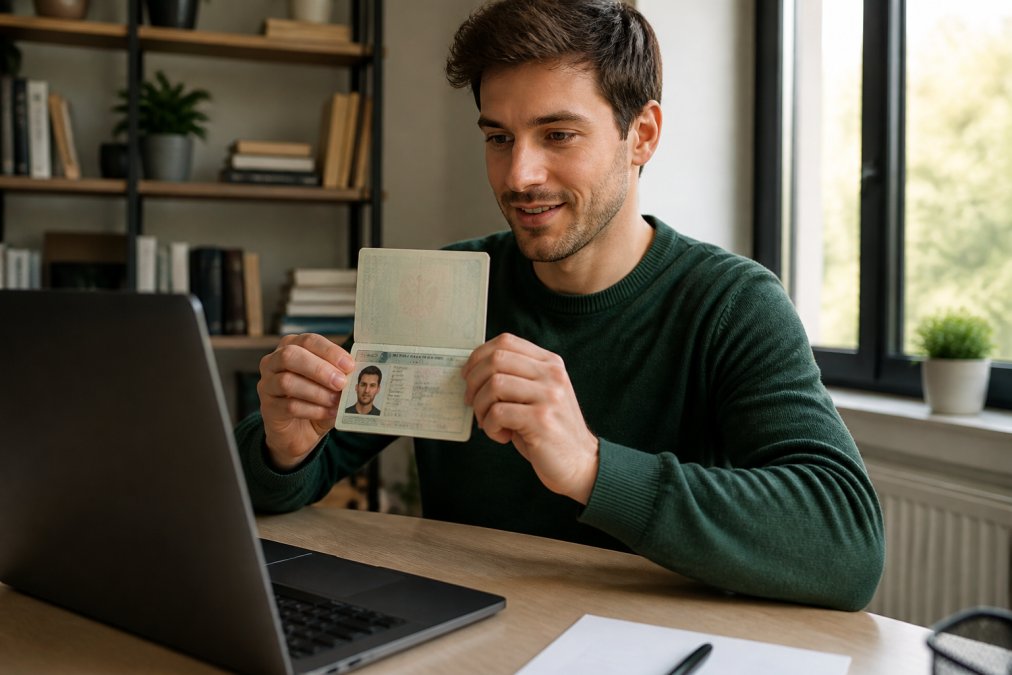
Once you submit your application online, the bank initiates a live video session with a trained agent. You present your passport or identity document to the camera. The agent verifies the document, confirms your identity, and logs the session. The entire process typically takes under 15 minutes.
VideoIdent vs. PostIdent: Which Route Works for You
| Method | How It Works | Best For | Limitations |
|---|---|---|---|
| VideoIdent | Live video call with bank agent via app or browser | Applicants outside Germany or without easy access to a post office | Requires stable internet connection; some document types not accepted |
| PostIdent | In-person ID check at any Deutsche Post branch | Applicants already in Germany | Requires physical presence at a post office |
| Branch verification | In-person appointment at the bank | Those who prefer face-to-face; complex cases | Requires travel; appointment availability varies |
VideoIdent is the preferred route for international applicants. PostIdent is reliable but requires physical presence at a Deutsche Post branch. Confirm accepted document types before starting a VideoIdent session, as failed verification attempts can delay your application by days.
Tax ID (Steueridentifikationsnummer) for Bank Accounts
The Steueridentifikationsnummer (tax identification number) is an 11-digit number assigned to every person registered in Germany for tax purposes. It is issued automatically after you complete your Anmeldung.
Banks increasingly request this number during account opening for compliance with the Common Reporting Standard (CRS) and Automatic Exchange of Information (AEOI) framework. If you do not yet have one, many banks will still open your account but will require you to provide it within a set period.
For non-residents, you may not automatically receive a Steueridentifikationsnummer. You may need to apply through the Bundeszentralamt für Steuern directly or through a tax adviser.
For corporate entities, the relevant number is the Steuernummer (company tax number), issued by the local Finanzamt after registration. This is required for business account applications.
Tax implications vary significantly by nationality. US citizens, for example, face additional FATCA reporting obligations, and some German banks decline to open accounts for US persons due to the compliance burden. Address this before you begin your bank search.
Fees, Schufa Checks, and What Banks Won't Tell You Upfront
Account Maintenance Fees and Hidden Costs
Account maintenance fees (Kontoführungsgebühren) vary considerably. Some direct banks offer fee-free accounts subject to conditions such as a minimum monthly incoming payment. Traditional branch banks typically charge a monthly fee.
Watch for overdraft facility (Dispokredit) interest rates, card fees, international transfer charges, and paper statement fees. The Schufa check is another variable. Schufa is the primary consumer credit reference agency in Germany. A negative Schufa entry can result in your application being declined. Newcomers without any Schufa history are generally treated more favourably.
If you have no Schufa history, the Basiskonto is your statutory right. Banks cannot refuse it on grounds of creditworthiness.
Closing a German Bank Account: What to Plan For
Closing a German bank account requires written notice to the bank, typically by letter or secure messaging. Notice periods vary but are commonly one to three months. Before closing, ensure all standing orders (Daueraufträge) and direct debits (Lastschriften) are cancelled or transferred. Outstanding SEPA mandates will continue to draw from the account until explicitly revoked.
Corporate Banking for Foreign-Owned GmbH and UG Entities
Corporate banking for foreign-owned entities is more demanding than personal account opening. Banks apply higher scrutiny to business accounts, and the process for GmbH and UG entities with non-resident shareholders is among the most demanding in European banking.
Under the Geldwäschegesetz, banks must identify and verify all beneficial owners of a company, typically anyone holding more than 25% of shares. For a foreign-owned GmbH, this means the foreign shareholder must undergo full KYC verification.
The sequence for corporate account opening is non-negotiable:
- Complete notarial incorporation and receive your Gesellschaftsvertrag
- Obtain your Handelsregister entry (commercial register number)
- Register in the Transparenzregister
- Gather KYC documents for all beneficial owners
- Approach the bank with the full document package
Many international founders approach banks before the Handelsregister entry is confirmed. Banks will not open a corporate account for a company that does not yet officially exist in the commercial register.
German-Nominee.de addresses this sequencing problem directly. By providing a licensed German nominee shareholder and trustee structure, we ensure that the incorporation process meets strict German notary requirements from the outset, so the corporate documentation presented to the bank is clean, complete, and compliant. Our clients avoid the apostille complications and document rejection cycles that plague self-managed foreign incorporations.
As documented in the German Commercial Register (Handelsregister) guidance, all GmbH and UG entities must be formally registered before conducting commercial activity, and banks treat this registration as a prerequisite for account opening.
| Account Type | Who It's For | Key Requirement | Schufa Check |
|---|---|---|---|
| Girokonto | Residents and registered expats | Anmeldung / Meldebescheinigung | Yes |
| Basiskonto | Anyone with EU legal residence | Legal residency status | No (legally excluded) |
| Non-resident account | Foreigners without German address | Passport, foreign address, VideoIdent | Varies by bank |
| Geschäftskonto (GmbH/UG) | Corporate entities | Handelsregister entry, notarial articles | Yes, plus KYC |
Foreigners opening a German bank account face a process that rewards preparation and punishes improvisation. The bureaucratic requirements are real, but they are navigable when you understand the sequence, the document requirements, and the distinction between account types.
Getting the banking piece right starts with getting the corporate structure right. German-Nominee.de has been guiding international entrepreneurs through legally compliant GmbH and UG formation since 1984, using a transparent trustee structure that meets German notary requirements without requiring you to travel. Book a call with the German-Nominee.de team to discuss your incorporation and banking pathway.
Frequently Asked Questions
Can I open a German bank account as a non-resident?
Yes, non-residents can open a German bank account, but the process is more restrictive. Most traditional branch banks require a registered German address (Meldebescheinigung) and a valid residence permit. Some direct banks and online providers accept non-residents with a foreign address, provided you pass VideoIdent or PostIdent identity verification and supply a valid passport. Business accounts for foreign-owned GmbH or UG entities typically require additional corporate documents and may need in-person or notarised steps.
Do I need a tax ID to open a bank account in Germany?
German banks are required under financial regulation to collect your Steueridentifikationsnummer (tax ID) for compliance with automatic information exchange rules. If you have not yet received one, some banks will open the account provisionally and request the number within a set period. Non-residents may need to supply their home country tax identification number instead. Failing to provide a valid tax ID can lead to account restrictions or closure, so obtaining your Steueridentifikationsnummer early is strongly advisable.
Which online banks in Germany work best for foreigners?
Several direct banks offer fully digital onboarding with VideoIdent, making them accessible to foreigners without a German address. These providers typically issue an IBAN and BIC quickly, support SEPA transfers, and charge lower account maintenance fees than traditional branch banks. The right choice depends on whether you need a personal Girokonto or a business account for a GmbH or UG. Corporate accounts generally require more documentation, including a notarised articles of association and proof of the company's registered address.
What documents are required to open a German bank account?
For a personal account, you typically need a valid passport or national ID, proof of address (Meldebescheinigung or a foreign utility bill), and your Steueridentifikationsnummer. Some banks also request a visa or residence permit. For a corporate account, you will additionally need the company's commercial register extract (Handelsregisterauszug), articles of association, and proof of identity for all beneficial owners. Non-EU founders may also need to provide legalised or apostilled documents depending on the issuing country.
Is it possible to open a German bank account before arriving in Germany?
Yes, through online direct banks that offer VideoIdent verification, you can complete the entire application remotely without setting foot in Germany. You will need a valid passport and a stable internet connection for the live video session. However, some account types, particularly business accounts for newly incorporated GmbH or UG entities, still require additional steps such as submitting certified corporate documents. Planning this in advance of your company's operational launch avoids delays in receiving your IBAN.
What is the Basiskonto and who is entitled to one?
The Basiskonto is a basic payment account that German banks holding a banking licence are legally obliged to offer under the Zahlungskontengesetz. Any legally resident person in Germany, including asylum seekers and stateless individuals, has the right to a Basiskonto regardless of creditworthiness or Schufa status. It covers essential functions such as SEPA transfers, direct debits, and card payments, but does not include an overdraft facility. Non-residents do not automatically qualify, though some banks extend the account voluntarily.
This article was written using GrandRanker